Featured Stage
Happy Glass
New Games

What Is Happy Glass?
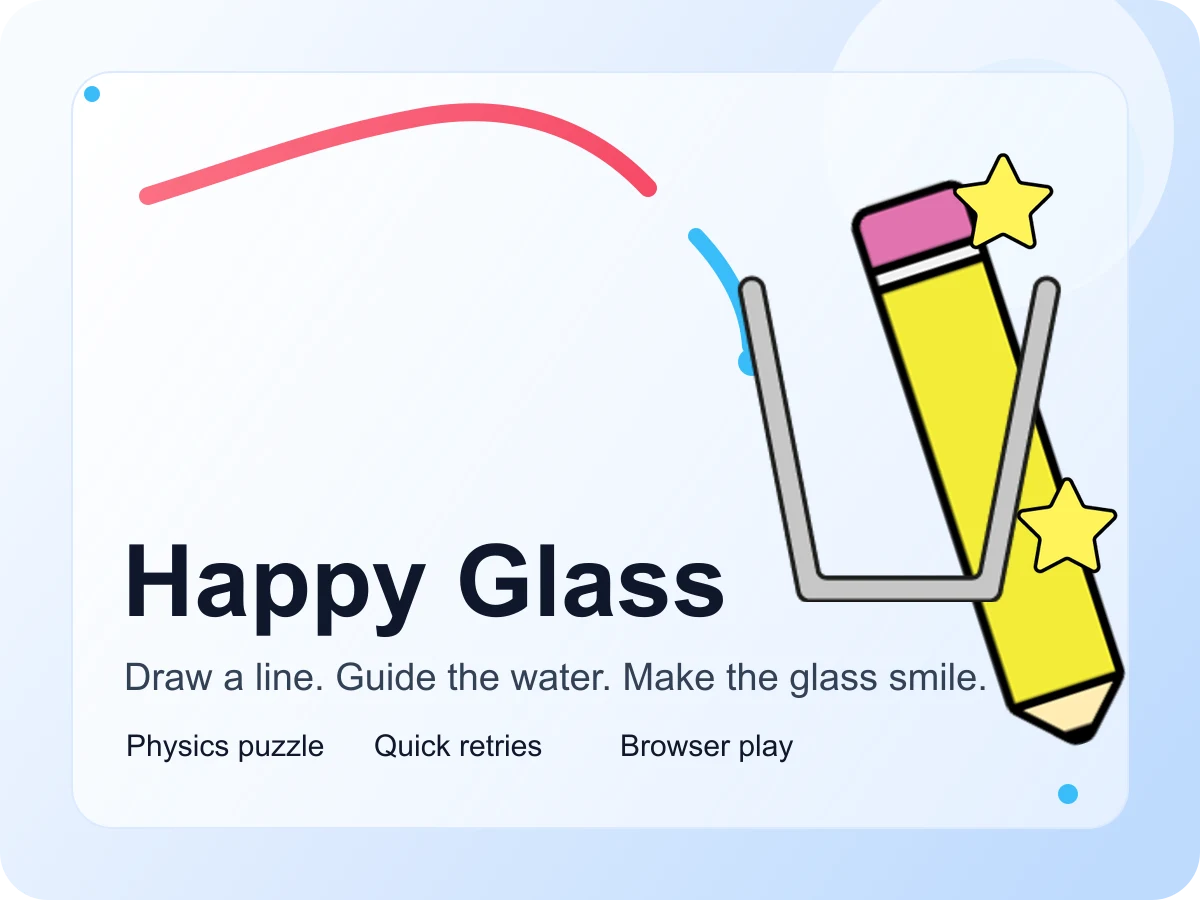
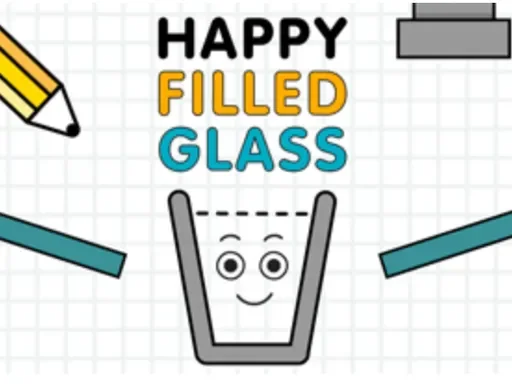
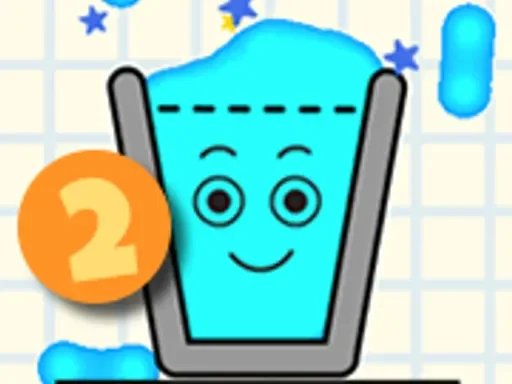
Happy Glass is a physics drawing puzzle where an empty cup waits below a water source and your job is to draw a line that guides enough liquid into the glass. When the fill mark is reached, the sad face turns into a smile and the level is cleared. The idea is instantly readable, which helped the game spread across mobile stores and browser portals.
Official listings from Lion Studios describe Happy Glass as a game where you draw lines freely to complete levels, while the Safe Kid Games browser page presents it as a physics challenge built around guiding water droplets into the cup and earning stars for better solutions. The rules are simple, but small changes in angle, line length, and placement can completely change the result.
That combination of easy controls and surprising depth gives Happy Glass its staying power. You can learn the goal in seconds, fail quickly, and improve through observation instead of memorizing complicated mechanics.
How Happy Glass Works
One line can change the whole level
Most stages start with a faucet or water source above, the glass somewhere below, and a gap, ledge, or obstacle in between. You click or tap and drag to create a solid line. That line can act like a ramp, wall, bridge, or protective barrier. Once the water begins to move, your drawing becomes part of the puzzle, so shape matters much more than decoration.
Gravity is the real puzzle partner
Happy Glass works best when you cooperate with gravity instead of trying to overpower it. Short slopes, gentle curves, and small support walls often do more than oversized drawings. A tiny change near the faucet can redirect the whole stream, while a line placed too close to the cup can make the water bounce out instead of settling in. The game keeps asking the same question in new ways: what is the simplest route that gets the water safely home?
Fast retries make experimentation fun
When a level fails, the reason is usually visible right away. Maybe the stream spills at the opening, clips the rim, or escapes through a corner you ignored. Because levels are short and restarts are immediate, failure becomes part of the learning process. You watch the motion, adjust the line, and test again with a cleaner idea.
Playing Happy Glass in Your Browser
On playhappyglass.com, Happy Glass runs directly in the browser, so you can start without installing an app or waiting through a long setup. That lighter format suits the game well because it keeps the focus on drawing, pouring, and retrying.
Desktop play gives you precise control with the mouse, especially when a level needs a narrow ramp or a carefully angled wall. On phones and tablets, touch input feels natural because the main action is sketching with your finger. The objective stays clear across screens, which is a big part of why the game works so well online.
Controls and Smart Habits
Use simple lines first
On desktop, click and drag to draw. On mobile, tap and drag with one finger. The most important habit is restraint. A compact line is easier to read, easier to revise, and less likely to create accidental collisions that split the stream.
Think about the first drop
Strong players often solve a stage by focusing on the first point of contact. If the opening part of the water stream lands in the wrong place, the rest usually follows it into failure. Before drawing, picture where the first drop should go. That one decision often determines the rest of the route.
Leave the cup room to receive water
It is tempting to build a fortress around the glass, but crowded drawings often make the final landing worse. The rim needs a clear path. Protect the cup from spills when necessary, but do not trap the opening with a giant barrier that makes the water bounce away at the last moment.
Change one thing at a time
If a solution almost works, avoid replacing everything. Move one endpoint, soften one angle, or shorten one wall. Small comparisons teach you why a level failed and help you notice useful physics patterns faster.
Why the Game Stays Popular
Happy Glass succeeds because it communicates its objective without needing a long tutorial. The sad cup, the target fill line, and the visible water source explain the challenge in a single screen. At the same time, the solution space stays open enough for creativity. Two players can look at the same puzzle and solve it with different lines, which makes the game feel expressive instead of rigid. Store descriptions call it simple, smart, and fun, and that summary fits. The game is relaxing enough for casual play, but it still rewards cleaner thinking and more efficient solutions.
Tips for Tough Levels
Start small, then expand if needed
If a stage looks complicated, begin with the shortest useful line you can imagine. A minimal test line tells you more than a huge sketch.
Read the spill pattern carefully
Where the water escapes tells you what to fix. Spills near the faucet mean the opening angle is wrong. Misses near the cup usually mean the landing path is too steep or too crowded.
Guide first, protect second
Some levels look like they need heavy defense, but many really need a clear route more than a thick barrier. Once the stream has the right direction, a small support wall is often enough to keep the final drops inside the glass.
Frequently Asked Questions
Is Happy Glass free to play online?
Yes. You can play Happy Glass in your browser on playhappyglass.com without downloading extra software.
What kind of game is Happy Glass?
It is a physics puzzle and drawing game where you create lines that control how water moves toward the cup.
Who made Happy Glass?
Official mobile store listings associate Happy Glass with Lion Studios, while browser portals host web versions of the same draw and fill concept.
How do I control Happy Glass on this site?
Use a mouse on desktop or touch on mobile to click, tap, and drag your line into place before the water finishes spilling away.
Why do short lines often work better?
Short lines are easier to control, leave more room around the cup, and reduce the chance of creating awkward bounces or blocked paths.
What should I do if I get stuck?
Watch the first drop, identify exactly where the spill begins, and make one small adjustment at a time instead of redrawing the whole solution.
Comments
Loading comments…